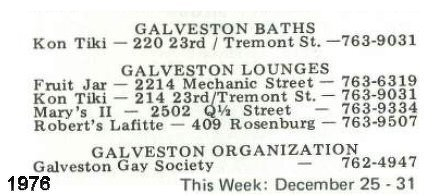
Texas’s oldest gay bar, Robert’s Laffite in Galveston, has been struggling lately after badly-needed repairs and a series of small but suspicious fires caused it to close down.
Meanwhile, a pair of interdisciplinary artists have uncovered evidence of another long-lost gay bar on the island, which operated for a few years during the late 1970s, just before the AIDS epidemic would devestate the community
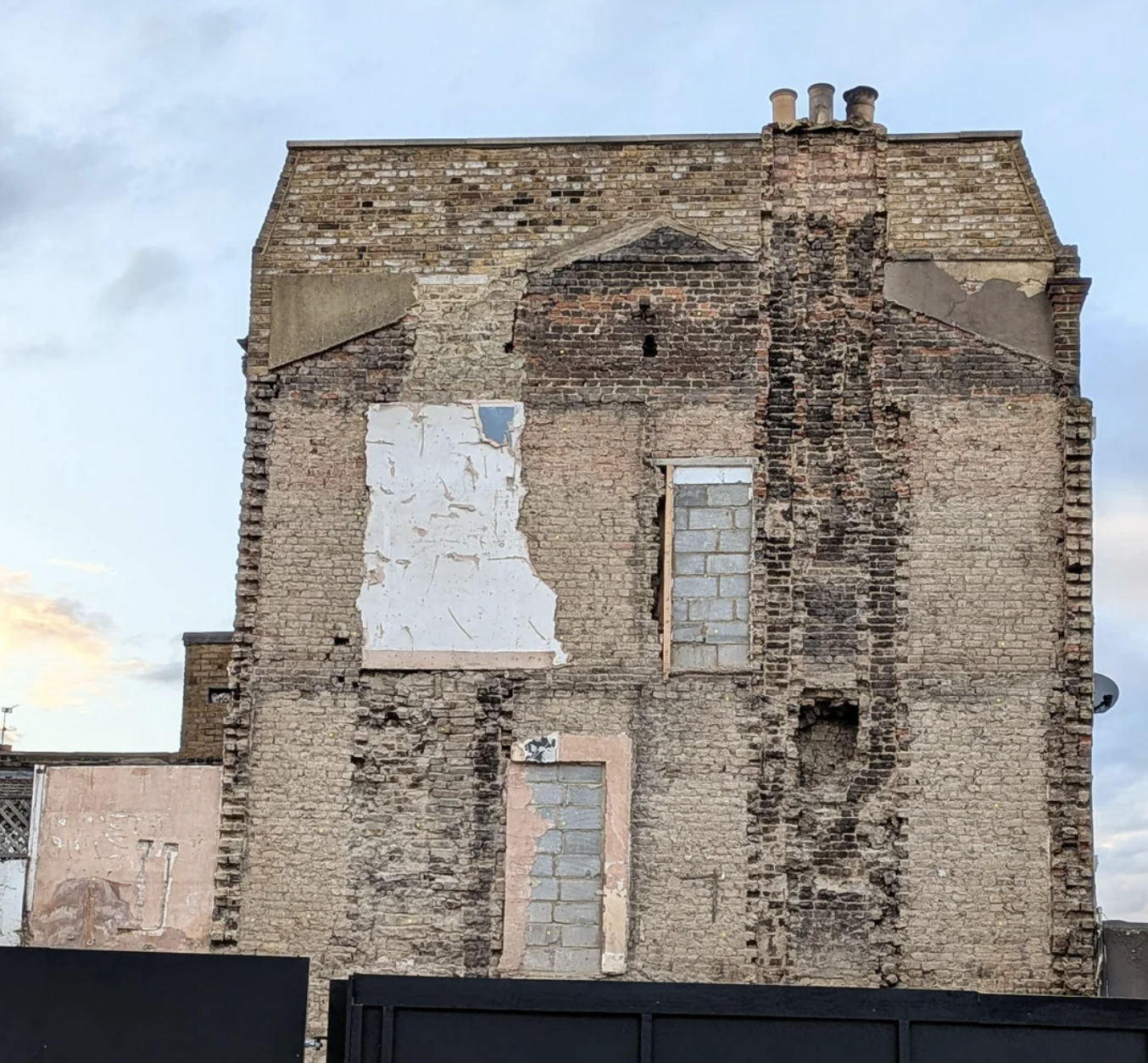
Called The Fruit Jar, the bar was located in a historic Victorian building on Mechanic Street, and was listed in the 1978 Damron Guide, a sort of “green book” for queer Americans.
The artists, Nick Vaughan and Jake Margolin, who are based in Houston, have created an installation dedicated to the Fruit Jar, including oral histories from community members, as part of their project honoring Town Meeting 1, which effectively kicked off the Houston pride movement and eventually lead to the largest gay pride celebration in the South.
(Incidentally I did search JD Doyle’s encyclopedic website HoustonLGBTHistory, which has a few mentions of the Fruit Jar.)
Vaughn and Margolin’s installation, The Fruit Jar, is on view at the Galveston Arts Center, also on Mechanic Street, through January 3, 2027.
• The Fruit Jar Unearths a Lost Chapter of Galveston’s Queer History — via OutSmart Magazine